
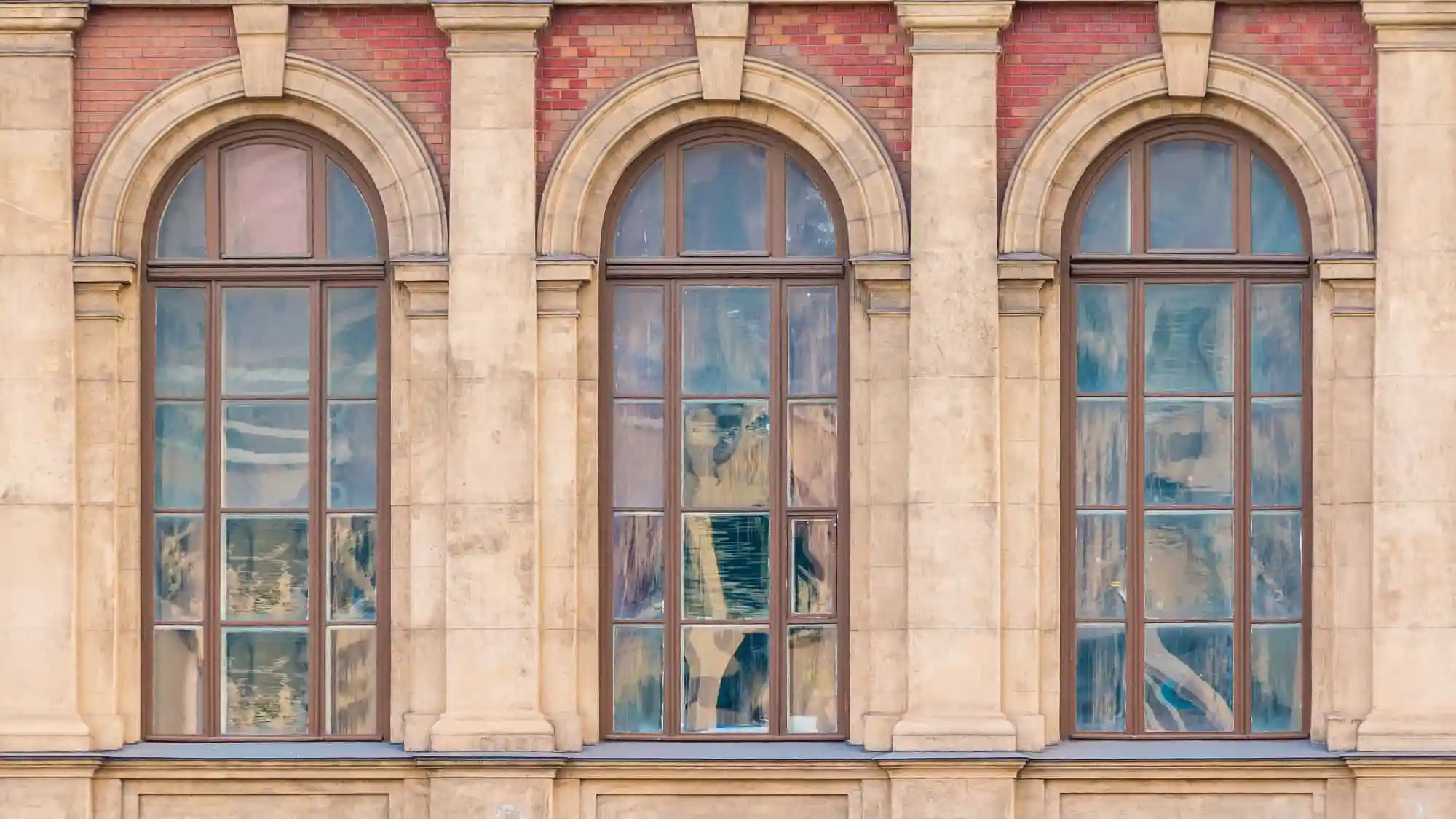
You’re standing in an older home in Detroit, sunlight filtering through original wooden windows that have seen decades, maybe even a century, of seasons. They creak a little and let in a faint draft, but they also carry something that new windows rarely do, character. Now you’re faced with a decision, replace them or bring them back to life.
This is where window restoration becomes more than a repair choice. It becomes a preservation decision that impacts comfort, value, and history.
Key Takeaways
- Restoring original windows preserves architectural character and long-term value
- Proper upgrades can improve comfort without full replacement
- Restoration is often more sustainable and cost-conscious than expected
- The right process balances heritage with modern performance
Problem: The misconception about old windows
Most homeowners assume aging windows automatically mean inefficiency and high energy bills. That’s not always true.
In many cases, the problem is not the window itself but neglect over time. Layers of paint, worn glazing, and failing seals can make older windows appear more damaged than they truly are. Replacing them entirely often means losing original craftsmanship that cannot be recreated.
That’s why window restoration is gaining attention again among preservation experts and modern remodelers alike.
A trusted contractor like In The D Construction often sees homeowners surprised at how much performance can be recovered without losing historic charm.
Insight: Why restoration still makes financial and design sense
One of the strongest arguments for window restoration is durability. Older wood, especially in historic homes, is often old-growth timber—denser and more resilient than many modern alternatives.
There’s also a design truth: once original windows are removed, the architectural integrity of historic homes is permanently altered. That balance of proportion, trim detail, and glass character is hard to recreate.
Even specialty window restoration services in Detroit MI often complement restoration projects, helping homeowners maintain historic glass features while upgrading performance.
Short Definition
Window restoration is the process of repairing, improving, and preserving existing window structures instead of replacing them, while enhancing performance and longevity.
Framework: The “P.R.E.S.E.R.V.E” method
A practical way professionals approach window restoration is through this framework:
P.R.E.S.E.R.V.E Method
- Preserve original frames and materials
- Remove damaged paint and failing sealants
- Evaluate wood and structural integrity
- Seal gaps and improve weatherproofing
- Enhance efficiency with glazing upgrades
- Reinforce hardware and moving parts
- Verify insulation and airflow control
- Evaluate final performance and finish
This method ensures restoration improves function without erasing history.
Energy insight
According to the U.S. Department of Energy, heat gain and loss through windows can account for about 25–30% of residential heating and cooling energy use
Source: https://www.energy.gov/energysaver/energy-efficient-windows
This is why window restoration benefits often focus on sealing and efficiency upgrades rather than full removal. Techniques like weatherstripping historic windows and repairing glazing putty can significantly reduce draft loss.
Comparison table: Restoration vs replacement
| Practice | When it helps | Simple cue | Mistake |
| Restoration | Original frames are solid | “Can wood be saved?” | Ignoring small rot early |
| Replacement | Severe structural damage | “Frame is beyond repair” | Replacing for cosmetic reasons |
| Hybrid approach | Mixed condition homes | “Some parts strong, some weak” | Over-upgrading unnecessarily |
This is where old window repair vs replacement becomes a critical decision rather than a default assumption.
Mistakes homeowners often make
Many homeowners rush into full replacement without fully evaluating options. Here are common mistakes:
- Assuming drafts always mean failure
- Ignoring sash imbalance instead of fixing it
- Skipping storm windows for energy efficiency upgrades
- Overlooking draft reduction in old windows through sealing
- Forgetting that hardware restoration improves usability
These mistakes often lead to unnecessary costs and loss of historic detail.
Real-world example: A Detroit historic home
A homeowner in Detroit had a 1920s brick home with 14 original sash windows. Contractors initially recommended full replacement due to air leakage.
Instead, a targeted window restoration approach was used:
- Frames were preserved and repaired
- Weatherstripping historic windows was installed
- Glazing putty was rebuilt
- Select storm panels were added
The result was a noticeable improvement in comfort while keeping the original façade intact. The home retained its historic identity, and the project cost less than full replacement.
Quote to remember
“The details are not the details. They make the design.” – Charles Eames
That idea sits at the heart of every successful restoration project.
When should you restore instead of replace?
Restore windows when:
- The wood frame is structurally sound
- Damage is limited to seals, paint, or glass
- You want to preserve architectural authenticity
- Energy issues are caused by air leakage, not frame failure
Simple steps in decision-making:
- Inspect frame condition
- Test sash movement
- Check moisture or rot levels
- Evaluate insulation gaps
- Compare long-term cost impact
Why restoration is more than repair
The real value of window restoration is not just technical, it is emotional and architectural. It preserves the rhythm of light, the proportions of the façade, and the identity of the home.
Even modern upgrades like energy-efficient sealing or storm panels are designed to support, not replace, the original structure.
That balance is what makes window restoration benefits so compelling for historic homeowners.
Conclusion:
When you choose window restoration, you’re not just fixing old materials. You’re extending the life of craftsmanship that already exists. Instead of erasing history, you’re strengthening it with modern performance upgrades.
For homeowners working with trusted experts like In The D Construction, restoration becomes a way to honor the past while improving everyday comfort.
In the end, the decision isn’t just about windows. It’s about what kind of home you want to live in, whether one that is replaced or one that is preserved.
Summary
Historic windows carry both character and structural value that modern replacements often struggle to match. With the right approach, window restoration improves efficiency while preserving architectural identity. When properly executed, it becomes a smart balance of sustainability, cost-effectiveness, and heritage preservation. For many homeowners, it remains one of the most meaningful upgrades they can make.
FAQ
1. Is window restoration cheaper than replacement?
In many cases, yes. Restoration often avoids full frame removal and reduces material costs.
2. How long does restored windows last?
With proper care, restored windows can last decades, especially when maintained regularly.
3. Does restoration improve energy efficiency?
Yes. Sealing, glazing repair, and storm windows can significantly reduce drafts and heat loss.
4. Can all historic windows be restored?
Not all, but many can be repaired if the main frame is still structurally sound.
5. What is the biggest benefit of window restoration?
Preserving architectural integrity while improving comfort and efficiency is the key advantage.