
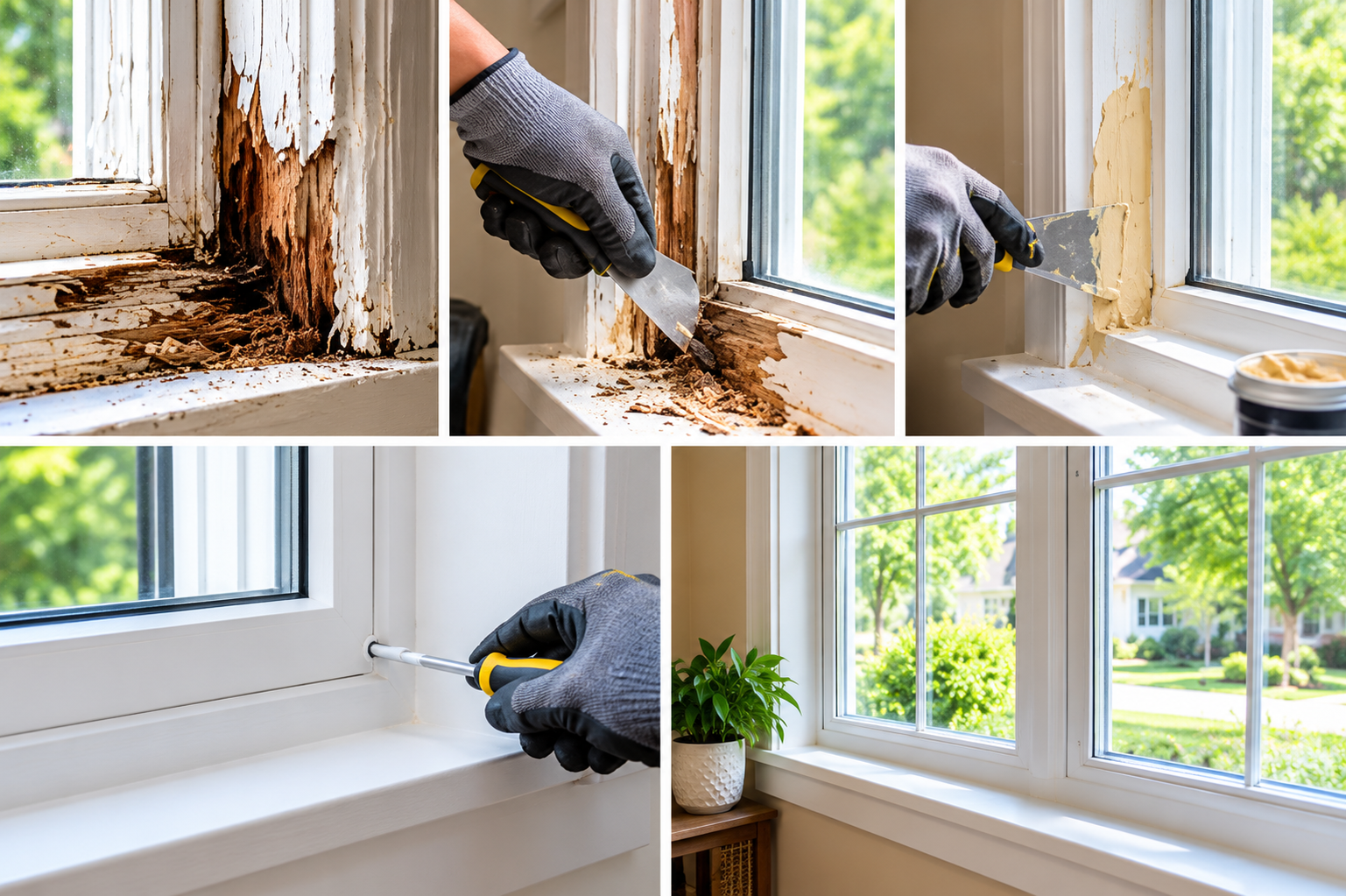
An old wood window can look worn without being beyond repair. Peeling paint, a stubborn sash, or a chilly draft may signal a maintenance problem rather than a reason to replace the entire window. The challenge is knowing which problems are minor and which point to deeper damage.
For Detroit homeowners, the decision can be more complicated. Older homes may have original wood windows that contribute to their architectural character. Replacing them without assessing their condition could mean losing features that are still worth preserving.
So, should you repair or replace your old wood windows? The answer depends on the condition of the wood, the source of the problem, the cost of repairs, and the window’s overall performance. A careful inspection can help homeowners make a practical choice without rushing into an expensive project.
Key Takeaways
- Repair is often worth considering when the frame remains sound and the damage is limited.
- Replacement may make more sense when rot, structural damage, or repeated failures affect major parts of the window.
- Weatherstripping, glazing repairs, and sash adjustments can address some common comfort problems.
- Historic windows deserve an assessment before replacement, especially when local preservation rules may apply.
When Is Old Wood Window Repair the Better Choice?
Old wood window repair is often a sensible option when most of the original frame remains solid. Many common window problems affect individual parts rather than the entire unit.
For example, a window that sticks during humid weather may need adjustment or repair. A loose pane may need new glazing, while worn weatherstripping can allow cold air to enter around the sash.
These issues do not automatically mean the window has reached the end of its useful life.
Signs Your Wood Windows May Be Repairable
Look for these conditions before considering full replacement:
- Peeling or cracked paint: The surface needs attention, but the underlying wood may still be sound.
- Minor wood damage: Small damaged areas may be suitable for professional wooden window frame repair.
- Loose or rattling glass: Damaged glazing or loose fittings may be repairable without replacing the entire window.
- Sticking window sashes: Dirt, worn hardware, paint buildup, or alignment problems may prevent smooth movement.
- Small drafts around the edges: Worn seals or gaps may be addressed with suitable weatherstripping and adjustments.
The important distinction is between a damaged component and a failing window. A professional assessment can help establish which situation applies.
When Should Old Wood Windows Be Replaced?
Replacement becomes more reasonable when damage affects the window’s structure or when repeated repairs no longer provide a reliable solution.
A window can look acceptable from the inside while hidden areas show signs of moisture damage. Checking the frame, sill, joints, and surrounding wood helps reveal whether the problem is limited or widespread.
Warning Signs That Need Closer Attention
1. Extensive wood rot
Soft, crumbling, or deeply damaged wood may indicate rot. If the damage reaches major structural sections, repairs can become more involved. Widespread deterioration may make replacement the more practical choice.
2. Repeated moisture problems
Water entering around a window can damage the frame and nearby wall materials. The source must be identified before any repair or replacement decision. Otherwise, moisture may continue damaging the new or restored window.
3. Persistent operation problems
A sash that repeatedly jams, drops, or refuses to stay open may have damaged components or a distorted frame. Some problems are repairable, but severe deterioration may require extensive rebuilding.
4. Poor performance after repairs
If a window remains drafty after appropriate sealing and adjustments, the homeowner should investigate the remaining causes. Damaged glass, loose joints, poor installation, and other issues may contribute to the problem.
5. Repairs that no longer make practical sense
Repeated repairs can add up, particularly when several major components need attention. Comparing a detailed restoration estimate with a replacement estimate can clarify which option offers better long-term value.
None of these signs automatically requires a new window. The extent of damage and the feasibility of restoring the original materials matter most.
Repair vs. Replace Wood Windows: What Matters Most?
The decision should consider more than appearance. A window with peeling paint may be in better condition than one with a freshly painted but deteriorating frame.
The following comparison can help homeowners organize their options.
Condition | Repair or restoration may suit | Replacement may suit |
Wood frame | Mostly solid with limited damage | Extensive deterioration in major sections |
Window operation | Sticking or loose parts can be corrected | Severe damage makes reliable operation impractical |
Glass and glazing | Individual panes or glazing need attention | Damage extends across components that cannot be practically restored |
Air leakage | Gaps can be sealed and hardware adjusted | Persistent problems remain after suitable repairs |
Historic character | Original features remain worth preserving | Restoration is impractical or other requirements justify replacement |
Project budget | Targeted repairs address the main problems | Extensive restoration costs approach or exceed a suitable replacement option |
Estimates should describe the same scope of work wherever possible. A basic replacement quote should not be compared with a full restoration quote that includes hardware, glazing, painting, and repairs to surrounding materials.
What Affects Wood Window Repair Costs?
Wood window repair costs vary according to the damage, window design, accessibility, and amount of labor required. A small repair is very different from rebuilding a badly deteriorated frame.
Homeowners should ask contractors to explain the work behind each estimate rather than focus only on the final price.
Important cost factors include:
- Extent of wood damage: Localized damage generally requires less work than deterioration across multiple frame sections.
- Glass and glazing: Broken panes, failed glazing, and related repairs can affect the total.
- Hardware and moving parts: Locks, hinges, cords, and sash components may need adjustment or replacement.
- Finishing work: Surface preparation, painting, sealing, and weatherproofing can add to the project.
- Access and surrounding damage: Difficult access or damage to adjacent trim and wall materials may increase labor.
Replacement costs also depend on the chosen window, installation requirements, finishing, and any necessary changes to the opening.
A useful estimate separates necessary repairs from optional improvements. It should also explain whether the proposed work addresses the source of moisture or air leakage.
A Simple Framework for Making the Decision
A structured inspection can make the choice less overwhelming. Rather than deciding based on age or appearance alone, homeowners can evaluate the window in stages.
Follow These Five Steps
- Inspect the visible wood. Look for soft areas, cracks, peeling paint, damaged sills, and signs of water entry. Avoid relying on appearance alone.
- Check how the window operates. Notice whether the sash opens, closes, locks, and stays in position properly.
- Identify drafts and moisture. Check around the edges and sill for air leakage, water stains, and recurring dampness.
- Compare written estimates. Request itemized repair and replacement options, including materials, labor, finishing, and related work.
- Check preservation requirements. If the property is in a historic district, confirm applicable rules before removing original windows.
This framework does not replace a professional inspection. It helps homeowners understand the problems and ask more useful questions before committing to a project.
Why Historic Wood Windows Deserve Special Attention
Original wood windows can contribute to a home’s proportions, craftsmanship, and architectural character. Their details may be difficult to reproduce exactly with modern replacements.
For owners of older Detroit homes, historic wood window preservation should be part of the decision. Restoring an original window may retain its existing materials and appearance while addressing practical problems.
However, preservation does not mean every old window must remain in place. Severe deterioration, safety concerns, or restoration requirements may change the best course of action.
Before replacing original windows, homeowners should check whether their property is subject to historic district rules. Approval requirements can vary by location and project.
Can Old Wood Windows Become More Energy Efficient?
Yes, some older wood windows can perform better after suitable repairs. Air leakage may be reduced by repairing gaps, adjusting sashes, improving weatherstripping, and addressing damaged glazing.
These improvements can make rooms more comfortable without requiring complete replacement.
However, sealing alone cannot correct every problem. Damaged frames, deteriorated joints, and other defects may require more extensive work. Homeowners should also avoid blocking drainage paths or creating moisture problems through unsuitable sealing methods.
The right approach addresses the actual cause of poor performance rather than assuming that every old window is inefficient.
Common Mistakes to Avoid When Repairing Old Wood Windows
Window projects can become more expensive when homeowners overlook the cause of damage or choose a solution based on appearance alone. Avoid these common mistakes:
- Assuming peeling paint means replacement is necessary: Peeling or cracked paint does not always indicate window failure. Inspect the underlying wood to determine whether the frame remains solid and repairable.
- Ignoring the source of moisture: Rotting wood window frames may indicate ongoing water exposure. Identify and fix the source before repairing damaged areas to help prevent recurring problems.
- Replacing windows before checking for drafts: Drafty old wood windows may need weatherstripping, sash adjustments, or glazing repairs rather than complete replacement. Identify where air enters before choosing a solution.
- Comparing estimates without checking the details: Review labor, materials, finishing, installation, and related repairs in each estimate. Make sure both options cover comparable work before deciding.
- Overlooking historic preservation requirements: Original wood windows may contribute to a historic home’s architectural character. Check applicable local historic district rules before replacing them.
- Assuming replacement always improves comfort: New windows do not automatically solve every draft or moisture problem. Installation quality, proper sealing, and the condition of surrounding walls also affect performance.
- Choosing restoration solely because the windows are original: Historic preservation is valuable, but windows must also be safe, functional, and practical to maintain. Consider their actual condition before making a decision.
When Should a Professional Inspect the Windows?
A professional assessment is particularly useful when wood feels soft, moisture keeps returning, the frame appears distorted, or repairs have failed repeatedly.
It is also worth arranging an inspection when homeowners cannot tell whether a draft comes from the window itself or the surrounding wall.
A qualified contractor can assess the frame, sash, glazing, hardware, and nearby materials. The assessment should explain which components can be repaired, which need rebuilding, and whether replacement is justified.
For homeowners considering historic window restoration in Detroit, the contractor should understand older construction methods and the importance of preserving original details where practical.
A clear proposal should explain the recommended work, expected limitations, finishing requirements, and any additional repairs that may be necessary.
FAQ
1. Is it worth repairing old wood windows?
Yes, when the frame remains sound and the problems are repairable. Restoring original windows may preserve architectural details and avoid unnecessary replacement. Extensive rot or repeated failures may make other options more practical.
2. How can homeowners tell when wood windows need replacing?
Look for widespread rot, major frame damage, persistent operational problems, or recurring air and water leakage that cannot be reasonably corrected. A professional inspection can determine whether restoration remains feasible.
3. Is wood window restoration cheaper than replacement?
It depends on the window’s condition and the work required. Minor repairs may cost less, while extensive restoration can require substantial labor. Comparing itemized estimates is the most reliable way to evaluate the options.
4. Can drafty old wood windows be repaired?
Often, yes. Weatherstripping, sash adjustments, glazing repairs, and sealing suitable gaps may reduce drafts. If leakage continues, the underlying cause should be investigated before deciding on replacement.
5. How can homeowners arrange an assessment for historic wood windows?
Homeowners can contact In the D Construction through email info@inthedconstruction.com, or call (313) 400-3520 to discuss historic window restoration and wood window repair options.
Summary
Choosing whether to repair or replace old wood windows does not have to be a guessing game. The most useful starting point is an honest assessment of the frame, moving parts, glazing, moisture exposure, and overall performance.
Repair is worth considering when the original materials remain sound and targeted work can restore reliable operation. Replacement may be more practical when major damage makes restoration difficult or uneconomical.
For historic properties, preservation requirements and architectural character also deserve consideration. By inspecting the windows, comparing detailed estimates, and addressing the cause of any damage, homeowners can make a better-informed decision for their property.