
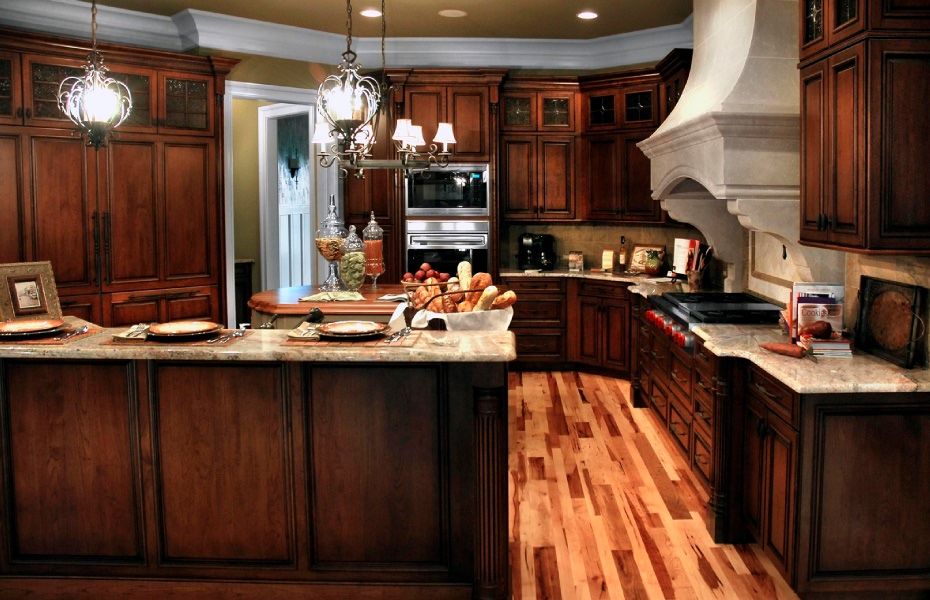
Picture a kitchen with one awkward corner, a low ceiling, or a narrow wall that seems impossible to use well. The homeowner has two choices. They can work around the space, or they can choose cabinets designed to work with it.
That is where the decision between custom vs semi-custom kitchen cabinets becomes important.
Both options offer more flexibility than basic stock cabinets. However, they differ in how much control homeowners have over dimensions, finishes, storage features, and overall design. Semi-custom cabinets can provide useful personalization without going fully custom. Custom cabinets can offer a more tailored solution for unusual layouts or highly specific design goals.
The right choice depends less on which option sounds better and more on how the kitchen needs to function.
Key Takeaways
- Semi-custom cabinets offer personalization within a defined range of choices.
- Custom cabinets provide greater control over dimensions, appearance, and storage features.
- Semi-custom cabinetry can suit straightforward layouts and controlled budgets.
- Custom cabinetry can make more sense when unusual spaces or specialized storage are priorities.
- Cabinet decisions should consider the entire kitchen plan, not just the cabinet price.
What Are Semi-Custom Kitchen Cabinets?
Semi-custom kitchen cabinets are manufactured cabinets that allow homeowners to choose from a range of available options.
Those choices can include cabinet sizes, door styles, finishes, colors, and other design details. The available choices depend on the cabinet manufacturer and product line.
The important point is that customization has boundaries.
A homeowner may be able to select a preferred finish and cabinet style. They may also have options for certain dimensions or configurations. However, the cabinets still come from an established system.
This makes semi-custom cabinetry a middle ground.
It offers more personalization than basic stock cabinets while avoiding the level of individual design associated with fully custom cabinetry.
What Are Custom Kitchen Cabinets?
Custom kitchen cabinets are designed and built around the specific requirements of a project.
Instead of choosing only from a predetermined cabinet system, homeowners can have greater control over dimensions, materials, finishes, shapes, and specialized features. Custom cabinetry can also address unusual spaces that standard cabinet dimensions cannot handle easily.
Think of the difference like buying clothing.
Semi-custom cabinetry is similar to choosing clothing from a range of available sizes and making a few adjustments. Custom cabinetry is closer to having something made specifically for one person.
Neither approach is automatically better.
The better option depends on the kitchen, the homeowner’s priorities, and the available budget.
Custom vs Semi-Custom Kitchen Cabinets: The Key Differences
The biggest differences usually appear in customization, fit, functionality, materials, and investment.
Factor | Semi-Custom Cabinets | Custom Cabinets |
Design flexibility | Moderate | High |
Cabinet dimensions | Limited to available options | Designed around the space |
Finishes and styles | Multiple choices | Broadly tailored |
Storage features | Available options | Highly specialized |
Unusual layouts | May require compromises | Can be designed around challenges |
Production | Manufactured to an established system | Built specifically for the project |
Budget | Generally more controlled | Typically requires a larger investment |
Lead time | Usually requires ordering | Often involves more planning and production |
These differences matter because cabinets do more than cover a wall. They influence how people cook, store food, organize dishes, and move through the room.
1. Design Flexibility
Design flexibility is one of the clearest differences.
Semi-custom cabinets provide a menu of choices. Homeowners can select from available door styles, finishes, colors, hardware, and sizes. This can be enough for many kitchens with conventional layouts.
Custom cabinetry provides a much wider design range.
For example, a homeowner might want cabinetry that reaches an unusual ceiling height. Another might need a cabinet shaped around an architectural feature. A third might want a specialized storage area for a particular appliance.
Custom design can address these needs more directly.
Simple rule
If the kitchen works well with standard cabinet dimensions, semi-custom may provide enough flexibility.
If the room has unusual dimensions or the homeowner has highly specific design requirements, custom cabinetry deserves closer consideration.
2. Fit and Cabinet Sizes
Kitchen walls are not always perfectly straightforward.
Older homes can have unusual dimensions, architectural details, narrow spaces, or areas that require careful planning. Even newer kitchens can have corners or walls that create wasted space.
Semi-custom cabinets can work very well when the available sizes match the room. But homeowners may need to accept certain gaps, fillers, or layout compromises when dimensions do not align.
Custom cabinets can be designed around the actual measurements of the space. This allows the cabinet plan to respond more precisely to unusual areas.
For homeowners remodeling an older property, this difference can become especially important.
3. Storage and Functionality
A beautiful kitchen is helpful. A kitchen that makes daily life easier is even better.
Semi-custom cabinets can provide practical storage through available organizational options. They may offer useful configurations for dishes, cookware, pantry items, and everyday supplies.
Custom cabinetry can take storage planning further.
A homeowner could plan specialized compartments around the way the household actually uses the kitchen. Features might include dedicated appliance storage, display areas, or compartments designed for specific items.
This creates an important question.
Should the cabinets simply fill the kitchen, or should they solve specific storage problems?
If the answer involves several specialized storage needs, custom design may provide more possibilities.
4. Materials, Finishes, and Construction
Both semi-custom and custom cabinetry can offer a step above basic stock options, but the exact materials and construction depend on the product selected.
Semi-custom cabinets typically come from established manufacturing systems. Homeowners choose from the available construction and finish options.
Custom cabinetry provides greater control over the specifications of the project. The design can be developed around the homeowner’s preferred appearance and functional requirements.
That does not mean every custom cabinet is automatically superior.
Quality depends on the actual materials, construction methods, craftsmanship, installation, and care. A homeowner should evaluate those details rather than assuming the word “custom” guarantees quality.
5. Cost and Overall Value
Cost is often the first concern when comparing cabinet options.
Semi-custom cabinets generally cost less than fully custom cabinets because they are based on established product systems and limited customization. Custom cabinetry requires more individual design and production work, which can increase the investment.
However, the lowest initial price does not always determine the best value.
A cabinet choice should be evaluated alongside the kitchen’s layout, storage needs, appearance, expected use, and project goals.
For example, saving money on cabinetry may not feel like a benefit if the final layout leaves difficult-to-use corners or insufficient storage.
On the other hand, paying for extensive customization may not provide much benefit when a semi-custom system already meets the household’s needs.
A Simple Decision Framework
Homeowners can use this four-step framework before choosing cabinetry.
- Measure the challenge.
Identify unusual walls, corners, ceiling heights, openings, and areas that need special attention. - List the priorities.
Decide whether budget, appearance, storage, durability, or design flexibility matters most. - Separate needs from wants.
Specialized storage may be a genuine need. A particular decorative detail may simply be a preference. - Compare complete solutions.
Look beyond cabinet pricing and consider design, installation, functionality, timeline, and the overall kitchen plan.
This approach helps prevent a common mistake: choosing cabinets before understanding how the entire kitchen needs to work.
A Real-World Example
Consider a homeowner renovating a kitchen in an older house.
The kitchen has a narrow wall, an unusual corner, and a ceiling that does not align neatly with standard cabinet dimensions. The homeowner also wants better storage for cookware and small appliances.
A semi-custom system could still work. However, the homeowner may need to adjust the layout around the available cabinet sizes.
A custom approach could allow the cabinet design to respond more directly to the unusual dimensions. Storage could also be planned around the household’s actual routines.
Neither choice is automatically correct.
If the homeowner has a controlled budget and can accept a few compromises, semi-custom cabinetry may be the practical route. If maximizing the available space is the main priority, custom cabinetry may justify the additional investment.
Do This, Not That
Do this: Start with the kitchen layout and daily routines.
Not that: Start with a cabinet door style and build the entire project around it.
Do this: Ask which storage problems need to be solved.
Not that: Assume more cabinets automatically mean better storage.
Do this: Compare materials, construction, finishes, measurements, and installation requirements.
Not that: Judge cabinets by price alone.
Do this: Consider how the cabinetry fits into the complete renovation.
Not that: Treat cabinet selection as a separate decision from kitchen design.
Common Misconceptions About Cabinet Choices
One misconception is that semi-custom cabinets are simply “cheap cabinets.”
That is not necessarily true. Semi-custom cabinetry can offer meaningful customization and can be a strong solution for many conventional kitchen layouts.
Another misconception is that custom cabinets are always the right answer.
Custom cabinetry provides greater flexibility, but that flexibility may not be necessary for every kitchen. A straightforward room may work beautifully with a well-planned semi-custom system.
There is also a misconception that custom automatically means better quality.
Quality should always be judged by the materials, construction, craftsmanship, design, and installation. The label alone does not tell the whole story.
When Should a Homeowner Consider Professional Help?
Professional planning becomes particularly useful when a kitchen has unusual dimensions, major layout changes, specialized storage needs, or several remodeling decisions happening at once.
A professional can help connect cabinet dimensions with appliances, counters, lighting, plumbing, electrical work, flooring, and the overall room design.
For homeowners searching for Kitchen Remodeling Contractors Detroit MI, the goal should be more than finding someone to install cabinets. The right professional should understand how cabinet choices affect the entire kitchen remodeling process.
A detailed plan can also help homeowners understand which custom features are genuinely useful and which may not justify the added investment.
FAQ
1. Are semi-custom cabinets a good choice for kitchen remodeling?
Yes. Semi-custom cabinets can be a practical choice when the kitchen has a straightforward layout and the available sizes, finishes, and features meet the homeowner’s needs.
2. Are custom kitchen cabinets worth the extra cost?
They can be worthwhile when unusual dimensions, specialized storage, or highly specific design requirements make standard options less suitable. The value depends on the project and the homeowner’s priorities.
3. Which cabinet option offers more design flexibility?
Custom cabinets generally provide greater flexibility because they can be designed around specific dimensions, appearance preferences, and functional requirements.
4. How long do custom and semi-custom cabinets take?
Both options may require planning and ordering rather than immediate availability. Actual lead times vary by manufacturer, design, materials, project requirements, and production schedules. Homeowners should confirm timing before setting a renovation schedule.
5. Can In The D Construction help with cabinet selection?
Yes. In The D Construction provides kitchen remodeling and custom kitchen cabinet design and installation services. Homeowners can contact info@inthedconstruction.com or 313-400-3520 to discuss their kitchen remodeling needs.
Conclusion
Choosing between custom and semi-custom cabinetry is ultimately a decision about how closely the cabinets need to fit the kitchen and the people who use it.
Semi-custom cabinets can provide a useful balance of personalization, function, and budget control. Custom cabinets can offer greater freedom when unusual spaces, specialized storage, or a highly specific design are involved.
The best approach is to evaluate the room first, then compare cabinet options against the project’s real priorities. Understanding custom vs semi-custom kitchen cabinets helps homeowners spend their remodeling budget where it can provide the most practical value.