
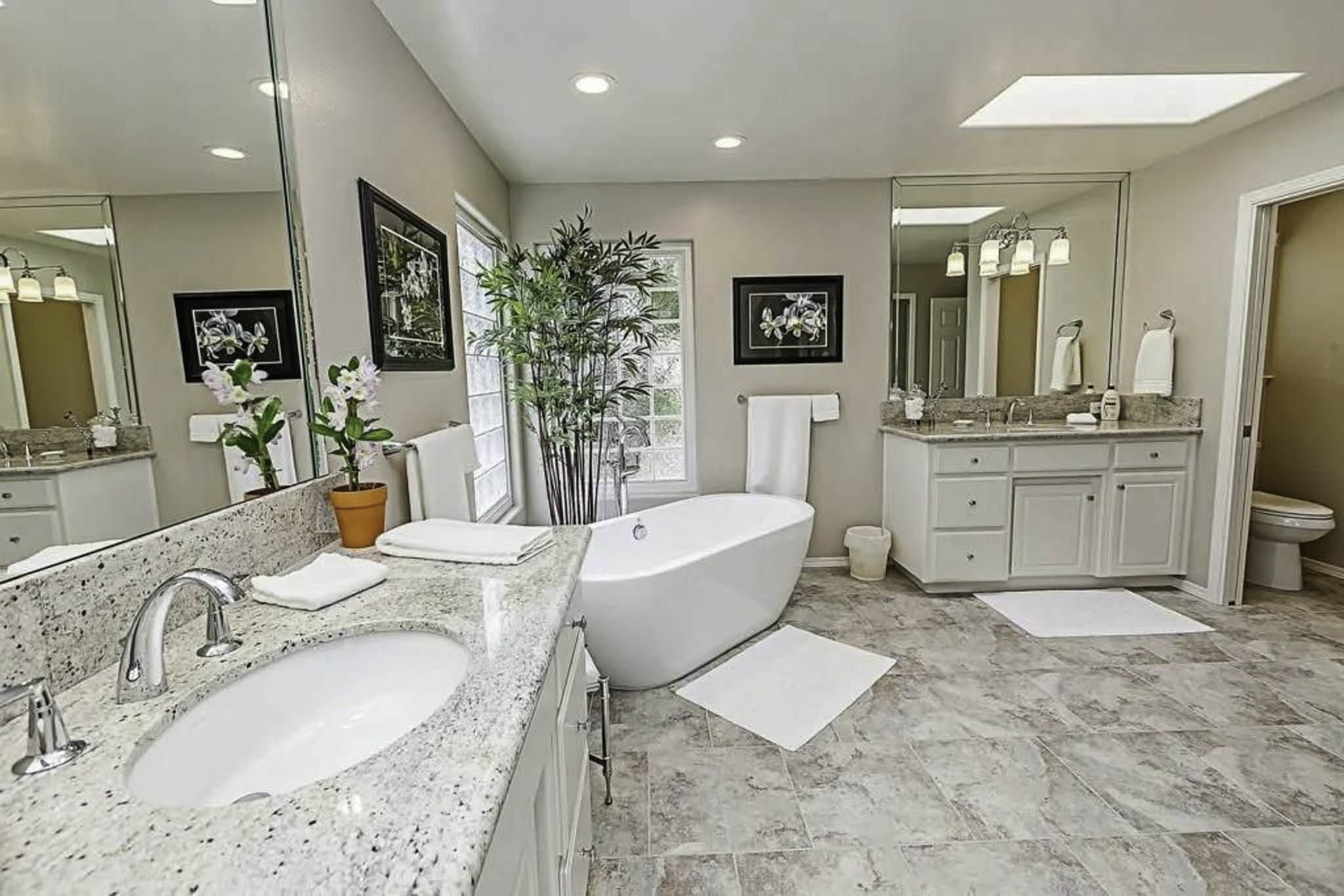
Imagine walking into a bathroom that feels dated, cramped, and difficult to use. The shower needs attention, the vanity has seen better days, and the lighting makes the room feel darker than it really is.
A full bathroom renovation can change all of that. But before choosing tile colors or browsing fixtures, most homeowners want to know one thing: What is the average bathroom renovation cost?
There is no single price that fits every home. A complete renovation can vary widely based on the bathroom’s condition, size, layout, materials, labor, plumbing, electrical work, and location.
For homeowners planning a full renovation, the most useful approach is to build a budget around the actual work involved rather than relying on one national average.
Key Takeaways
- A full bathroom renovation can involve demolition, plumbing, electrical work, waterproofing, flooring, tile, fixtures, cabinetry, and finishing.
- Keeping the existing layout can help control costs when the plumbing and electrical systems are suitable.
- Materials and labor are major parts of the overall bathroom renovation cost.
- A detailed project estimate is more useful than a generic online price.
- Older bathrooms may require additional repairs after demolition reveals hidden problems.
What Is the Average Bathroom Renovation Cost?
The bathroom renovation cost depends primarily on what the renovation includes.
A basic update may focus on replacing visible finishes and fixtures. A full renovation goes much further. It can involve removing existing materials, repairing surfaces, updating plumbing and electrical systems, installing new flooring and wall finishes, and rebuilding the shower or bathtub area.
The U.S. Census Bureau reports that homeowners had a median expenditure of $5,000 for bathroom remodels in its 2023 American Housing Survey data covering home improvements from 2021 through 2023.
That figure should not be treated as the price of a complete renovation. The survey covers bathroom remodeling projects broadly, while a full renovation can involve much more extensive work.
For planning purposes, homeowners should think in terms of project scope rather than one fixed average.
What Does a Full Bathroom Renovation Include?
A complete bathroom renovation usually touches several parts of the room.
The work may include:
- Demolition and removal of old materials
- Plumbing updates
- Electrical improvements
- Shower or bathtub replacement
- New bathroom flooring
- Wall tile or other wall finishes
- Vanity and countertop installation
- Toilet replacement
- Sink and faucet installation
- Lighting improvements
- Mirrors and hardware
- Painting and final finishing
- Waterproofing and surface preparation
Not every project requires all these services. That is why two bathrooms of similar size can have very different remodeling budgets.
A bathroom that needs new tile and fixtures is a different project from one that requires a complete layout change.
The Biggest Factors That Influence Bathroom Renovation Cost
1. Bathroom Size
The size of the room affects the amount of flooring, wall material, tile, paint, and other finishes required.
However, size is only part of the equation.
A small bathroom can still become expensive if it requires detailed tile work, plumbing changes, custom cabinetry, or extensive repairs.
2. Existing Bathroom Condition
The condition of the existing bathroom can have a major impact on the final budget.
Once demolition begins, contractors may discover damaged surfaces, deteriorated subfloors, outdated wiring, plumbing concerns, or moisture-related problems.
These issues are not always visible during the initial walkthrough.
A realistic bathroom renovation budget should leave room for necessary repairs rather than assuming everything behind the walls is perfect.
3. Layout Changes
One of the biggest decisions is whether to keep the current bathroom layout.
Keeping the toilet, shower, sink, and other plumbing fixtures in their existing locations can simplify the work.
Moving them may require additional plumbing work and construction. That does not mean layout changes are a bad idea. Sometimes moving a fixture creates a much more functional bathroom.
The key is understanding the cost before construction begins.
4. Materials and Fixtures
Bathroom renovation materials range from practical and affordable to highly customized.
The choice of tile, vanity, countertop, shower system, faucets, lighting, flooring, and hardware can change the overall project budget.
A homeowner does not need the most expensive materials to create an attractive bathroom.
Durability, maintenance, water resistance, and compatibility with the home should matter just as much as appearance.
5. Labor
Bathroom remodeling involves several skilled trades.
Depending on the project, work may involve plumbers, electricians, tile installers, carpenters, painters, and other professionals.
Labor costs also reflect preparation, coordination, installation, cleanup, and project management.
This is why a contractor’s estimate should clearly explain what is included rather than presenting one unexplained total.
A Simple Framework for Building a Bathroom Remodel Budget
A useful way to approach bathroom renovation planning is the Scope, Systems, Surfaces, and Safety framework.
1. Scope
Decide what is actually changing.
Is the project replacing finishes, or is the entire room being rebuilt?
2. Systems
Review plumbing, electrical, ventilation, and other behind-the-wall systems.
These components may not be visually exciting, but they can strongly influence the project.
3. Surfaces
Choose flooring, tile, walls, countertops, cabinetry, fixtures, and other visible finishes.
This is where homeowners can adjust the budget without necessarily changing the basic function of the bathroom.
4. Safety
Consider waterproofing, proper electrical work, ventilation, stable flooring, and other construction details.
A beautiful bathroom still needs to perform well in a wet environment.
Bathroom Renovation Cost Breakdown
Rather than focusing only on the final price, homeowners can divide the budget into major work categories.
Project Area | What It Can Include | Budget Impact |
Demolition | Removing old fixtures, flooring, tile, and finishes | Depends on existing materials and disposal |
Plumbing | Fixture connections, repairs, or layout changes | Higher when fixtures move |
Electrical | Wiring, outlets, switches, and lighting | Depends on existing system and upgrades |
Shower or Tub | Replacement, tile, waterproofing, and fixtures | Varies with design and materials |
Flooring | Tile or other moisture-resistant flooring | Depends on material and installation |
Vanity | Cabinet, countertop, sink, and hardware | Higher with custom options |
Walls | Tile, plaster, drywall, paint, or other finishes | Depends on surface condition |
Fixtures | Toilet, faucets, shower hardware, and accessories | Wide range of available options |
Finishing | Painting, trim, mirrors, hardware, and cleanup | Depends on project details |
This approach makes the bathroom remodeling cost easier to understand because each part of the project has a purpose.
A Realistic Bathroom Renovation Example
Consider a homeowner with an older bathroom that still has a functional layout.
The homeowner wants a new shower, updated flooring, a modern vanity, improved lighting, fresh wall finishes, and new fixtures. The existing plumbing locations can remain unchanged.
That project may be more straightforward than a renovation that moves the shower and toilet, removes walls, changes electrical circuits, and requires extensive structural repairs.
The lesson is simple: the amount of construction matters more than the size of the shopping list.
A bathroom can look completely different without every component being relocated.
Do This, Not That When Planning a Renovation
Do This | Not That |
Establish the project scope first | Start buying fixtures immediately |
Review plumbing and electrical needs | Assume existing systems need no work |
Compare materials based on durability | Choose materials based only on appearance |
Keep the layout when it makes sense | Move fixtures without considering added work |
Request a detailed estimate | Rely on one generic online price |
Plan for possible repairs | Spend the entire budget on finishes |
Discuss expectations with the contractor | Assume every contractor includes the same work |
Common Misconceptions About Bathroom Remodeling
One common misconception is that a small bathroom must always be inexpensive.
That is not necessarily true. A compact space can require detailed installation, specialty materials, or significant plumbing work.
Another misconception is that the most expensive fixtures automatically create the best renovation.
In reality, good planning often matters more. A practical layout, quality installation, appropriate materials, and proper waterproofing can create a bathroom that performs well for years.
Some homeowners also focus heavily on the visible finishes while overlooking the systems behind them.
A beautiful vanity cannot compensate for poor plumbing or inadequate waterproofing.
When Should a Homeowner Hire a Professional?
Professional help becomes especially valuable when a project involves multiple trades or changes to plumbing and electrical systems.
A qualified bathroom renovation contractor can help define the scope, coordinate different stages of construction, identify potential problems, and create a more complete bathroom renovation estimate.
Professional planning can also reduce the chance of making expensive decisions halfway through construction.
For homeowners in Detroit, Bathroom Renovation Services Detroit MI can be particularly useful when a project involves older homes where existing construction may require careful evaluation before work begins.
How to Create a More Realistic Bathroom Remodel Budget
A practical planning process can make the renovation easier to manage.
- Define the goal. Decide whether the priority is function, appearance, accessibility, storage, or a combination.
- Inspect the existing space. Look at plumbing, electrical systems, surfaces, ventilation, and signs of moisture damage.
- Decide whether the layout should stay. Avoid moving fixtures unless the improvement justifies the additional construction.
- Choose materials early. Select major fixtures and finishes before finalizing the budget.
- Request a detailed estimate. Make sure labor, materials, demolition, installation, and other project requirements are clearly identified.
- Keep flexibility in the budget. Older bathrooms can reveal unexpected conditions during demolition.
Frequently Asked Questions
What is included in a full bathroom renovation?
A full renovation can include demolition, plumbing, electrical work, flooring, tile, shower or bathtub replacement, vanity installation, fixtures, lighting, painting, waterproofing, and finishing.
Is it cheaper to keep the existing bathroom layout?
Often, keeping the existing layout can reduce the amount of plumbing and construction work required. The final decision should depend on the bathroom’s condition and how well the current layout functions.
What usually increases bathroom renovation costs?
Major cost drivers include layout changes, plumbing or electrical upgrades, extensive repairs, custom cabinetry, specialty materials, detailed tile work, and premium fixtures.
How can homeowners control bathroom remodeling expenses?
Homeowners can start with a clear scope, keep plumbing locations where practical, select durable materials, compare detailed estimates, and avoid spending the entire budget on decorative finishes.
Can a professional contractor help with a bathroom renovation budget?
Yes. A professional can evaluate the existing space, define the scope, coordinate construction requirements, and provide a project-specific estimate. Local experience can also help identify construction considerations that generic online calculators cannot account for.
Final Thoughts
The average bathroom renovation cost is best viewed as a starting point, not a promise of what a specific project will cost.
A complete renovation can range from a relatively focused update to a major reconstruction involving plumbing, electrical work, new surfaces, fixtures, cabinetry, and extensive repairs. The final price depends on the choices made and the condition of the existing bathroom.
For homeowners, the smartest approach is to define the scope first, understand where the money is going, and choose improvements that support both daily comfort and long-term durability.
For a project-specific consultation, homeowners can contact In The D Construction through inthedconstruction.com or call 313-400-3520 to discuss bathroom renovation needs.
Summary
A full bathroom renovation is more than replacing a few fixtures. The bathroom renovation cost depends on the scope, existing conditions, layout, materials, labor, plumbing, electrical work, and finishing requirements. A clear plan and detailed estimate can help homeowners avoid unrealistic expectations and make better decisions. Prices discussed in this article are general planning guidance and should not be treated as a fixed quote. A qualified contractor should provide a project-specific estimate after evaluating the bathroom.