
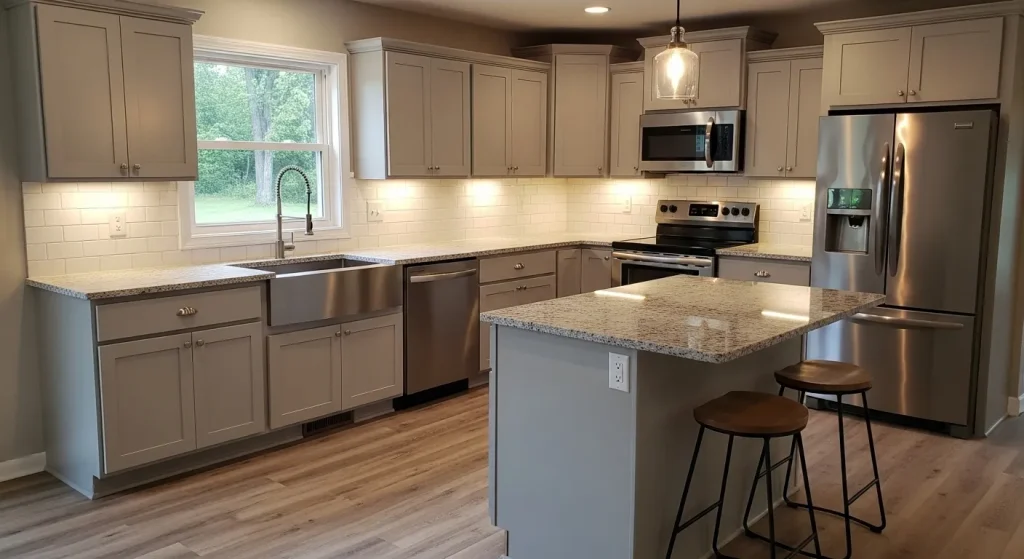
A kitchen remodel often starts with a simple thought: the cabinets need updating, the counters look tired, and the layout no longer works. Then the planning begins, and the kitchen remodel cost becomes a much bigger question.
For a complete project, there is no single price that fits every home. Kitchen size, materials, layout changes, appliances, labor, plumbing, electrical work, and finish choices can all change the final investment.
A useful planning reference comes from a kitchen remodeling cost guide that places large, complete remodels in the $65,000 to $130,000 or more range. That figure is an example rather than a universal price. Local labor rates, project conditions, and homeowner choices can move the final cost considerably.
The best approach is to understand what drives the budget before choosing materials or committing to a design.
Key Takeaways
- A complete kitchen remodel can involve much more than replacing cabinets and countertops.
- The kitchen layout has a major effect on labor and installation requirements.
- Cabinets, countertops, appliances, flooring, lighting, plumbing, and electrical work all contribute to the budget.
- A detailed kitchen remodeling estimate is more useful than relying on a general online average.
- Good planning helps homeowners spend more on the features that matter most.
What Does a Complete Kitchen Remodel Include?
A complete kitchen remodel usually involves updating several parts of the room rather than making one isolated improvement.
The work may include new cabinetry, countertops, flooring, backsplash materials, lighting, appliances, sinks, faucets, painting, and storage features. Some projects also involve plumbing and electrical upgrades.
The difference between a cosmetic update and a full kitchen renovation is important.
Replacing cabinet hardware and repainting walls can refresh a kitchen without changing its basic structure. A complete remodel goes further. It may change how the kitchen functions, how people move through the space, and how storage is organized.
Layout changes can also affect the project significantly. Moving a sink, adding an island, changing appliance locations, or opening a wall may require additional planning and skilled trades.
That is why comparing two kitchens based only on their size can be misleading.
The Biggest Factors Behind Kitchen Remodel Cost
Kitchen Size
A larger kitchen generally requires more cabinetry, flooring, countertop material, lighting, and labor. However, size alone does not determine the budget.
A compact kitchen with custom cabinets and premium finishes can require more investment than a larger kitchen with straightforward updates.
The condition of the existing space matters too. An older kitchen may reveal outdated wiring, plumbing problems, damaged surfaces, or other conditions once demolition begins.
Cabinets
Cabinetry is one of the most visible parts of a kitchen and often becomes one of the most important budget decisions.
Stock cabinets can provide a practical solution for homeowners who want to control expenses. Semi-custom cabinets offer more flexibility in sizing, finishes, and storage.
Custom cabinetry provides the greatest design freedom. It can be built around unusual walls, specialized storage needs, or a particular architectural style.
The right choice depends on how the kitchen will be used, not simply how the cabinets look in a showroom.
Countertops
Countertops need to balance appearance, durability, maintenance, and budget.
Laminate can provide an economical solution, while materials such as quartz, granite, and other premium surfaces can create a more substantial visual impact.
The countertop cost also depends on the size and shape of the kitchen. Islands, cutouts, edges, backsplashes, and unusual layouts can add complexity.
Appliances
Appliances can represent another major portion of a kitchen remodel budget.
Homeowners may replace only essential appliances or choose a coordinated collection. The choice should reflect how the kitchen is actually used.
For example, a household that cooks frequently may prioritize a high-quality range. Another household may place greater value on refrigerator storage or dishwasher performance.
Spending should follow lifestyle needs rather than trends alone.
Flooring and Lighting
Flooring is both a practical and visual decision. Kitchen floors need to handle daily traffic, spills, cleaning, and regular use.
Lighting deserves similar attention. A well-designed kitchen often needs more than one light source. General lighting, task lighting, and accent lighting can each serve a different purpose.
These details may seem small during planning, but they can make a remodeled kitchen feel much more comfortable.
Plumbing and Electrical Work
A kitchen remodel becomes more involved when plumbing or electrical locations change.
Moving a sink can require plumbing adjustments. Relocating appliances can require electrical changes. Adding lighting or outlets may also involve additional work.
This is one reason homeowners should avoid building a budget around visible finishes alone.
A Simple Framework for Building a Kitchen Remodel Budget
A useful way to approach kitchen renovation planning is to divide decisions into four categories.
Step 1: Define the Must-Haves
Start with the features that genuinely need to change.
These might include poor storage, an inefficient layout, worn cabinets, inadequate lighting, or outdated appliances.
Step 2: Separate Wants From Needs
Once the essential work is identified, homeowners can consider upgrades.
A larger island, specialty storage, decorative backsplash, premium hardware, or statement lighting may improve the space. The key is knowing which upgrades are worth the added investment.
Step 3: Protect the Project Scope
Changing decisions after construction begins can create delays and additional expenses.
A clear kitchen design and remodeling plan helps reduce unnecessary changes. Materials, appliances, finishes, and layout decisions should be reviewed before work starts.
Step 4: Get a Project-Specific Estimate
Online cost ranges are useful for early research, but they cannot account for the exact conditions inside a particular home.
A professional kitchen remodeling estimate should reflect the existing space, desired scope, materials, labor, and planned changes.
Common Kitchen Remodeling Budget Mistakes
Practice | When it helps | Simple cue | Mistake to avoid |
Set priorities early | Before design decisions | Identify the features that matter most | Spending heavily on low-priority details |
Review the layout | Before construction | Check how people move through the kitchen | Choosing finishes before solving workflow |
Compare materials | During design | Look at durability and maintenance | Selecting materials based only on appearance |
Plan lighting | Before installation | Think about cooking and preparation areas | Treating lighting as an afterthought |
Review the full estimate | Before signing | Understand what the project includes | Assuming every visible detail is included |
Does a More Expensive Kitchen Always Mean a Better Kitchen?
Not necessarily.
A successful kitchen is not simply the one with the most expensive materials. It is the one that fits the homeowner’s needs, the home’s character, and the available budget.
A family that needs more storage may benefit more from thoughtful cabinet organization than premium countertops.
Someone who enjoys cooking may gain more from an efficient work triangle, better lighting, and carefully selected appliances.
The goal should be value, not unnecessary spending.
A Realistic Example of Kitchen Renovation Planning
Consider a homeowner living in an older house with a kitchen that has limited storage and an awkward workflow.
The homeowner initially wants new cabinets and countertops. During planning, it becomes clear that the refrigerator location makes movement difficult. The lighting is also inadequate, and the existing storage does not suit the family’s needs.
Instead of choosing finishes immediately, the homeowner first addresses the layout and storage.
The design then considers cabinetry, countertop material, lighting, appliances, and flooring as parts of one connected project.
This approach can create a more useful kitchen because every major decision supports the overall design.
It also demonstrates why a kitchen remodel cost should be considered as a complete project rather than a collection of individual products.
How Homeowners Can Control Kitchen Remodeling Expenses
Cost control does not necessarily mean choosing the cheapest materials.
One practical strategy is to protect the existing layout when it already works well. Avoiding unnecessary plumbing and electrical relocation can simplify the project.
Another approach is to invest in high-use features while choosing more economical options elsewhere.
For example, homeowners may prioritize durable countertops and quality cabinetry while selecting simpler decorative finishes.
It can also help to finalize selections early. Last-minute changes may affect ordering, scheduling, installation, and the overall kitchen renovation timeline.
Most importantly, homeowners should understand exactly what their contractor’s estimate includes.
When Should Homeowners Hire a Kitchen Remodeling Contractor?
Professional help becomes especially valuable when a project involves multiple trades or significant layout changes.
A remodeling contractor can help coordinate design decisions, demolition, installation, plumbing, electrical work, cabinetry, flooring, and finishing.
For homeowners searching for Kitchen Remodeling Contractors Detroi MI, the important consideration is not simply finding the lowest estimate. Experience, communication, project scope, workmanship, and clarity about costs all deserve attention.
A contractor should be able to explain what the project includes and identify areas that may require additional planning.
FAQ
1. What is included in a complete kitchen remodel?
A complete kitchen remodel may include cabinetry, countertops, flooring, appliances, lighting, backsplash work, painting, plumbing, electrical updates, and layout changes. The exact scope depends on the home and project goals.
2. What has the biggest effect on kitchen remodel cost?
Cabinetry, materials, labor, appliances, and layout changes can all have a major effect. The condition of the existing kitchen can also influence the final estimate.
3. Can a homeowner reduce the cost of a kitchen renovation?
Yes. Keeping a functional layout, comparing materials, prioritizing essential improvements, and making selections early can help control expenses without sacrificing important features.
4. Is it better to remodel the entire kitchen at once?
A complete remodel can make sense when several parts of the kitchen need improvement. Coordinating the work together can also create a more unified design and reduce the need to repeat disruptive construction later.
5. How can homeowners get an accurate kitchen remodeling estimate?
The best approach is to have the existing kitchen reviewed and discuss the desired scope with a qualified remodeling professional. A project-specific estimate can then account for the actual space, materials, labor, and planned changes.
Conclusion
Understanding kitchen remodel cost before construction begins gives homeowners a stronger foundation for making decisions. The final investment depends on the kitchen’s condition, layout, materials, appliances, labor, and level of customization.
The smartest budget is not necessarily the smallest one. It is a budget that puts money toward the features that improve everyday life while avoiding unnecessary upgrades.
For homeowners planning a complete renovation, professional kitchen remodeling services can bring the design, construction, materials, and practical details together into one coordinated project.
For a project-specific consultation or free quote, contact In The D Construction at 313-400-3520 or info@inthedconstruction.com. Request a consultation
Summary
A complete kitchen remodel is a major home improvement project, and its cost depends on far more than kitchen size. Cabinets, countertops, appliances, flooring, lighting, layout changes, labor, plumbing, and electrical work can all influence the final estimate. Careful planning helps homeowners focus their budget on practical improvements that support how they live. A detailed professional estimate provides a more reliable starting point than a general online price range.