
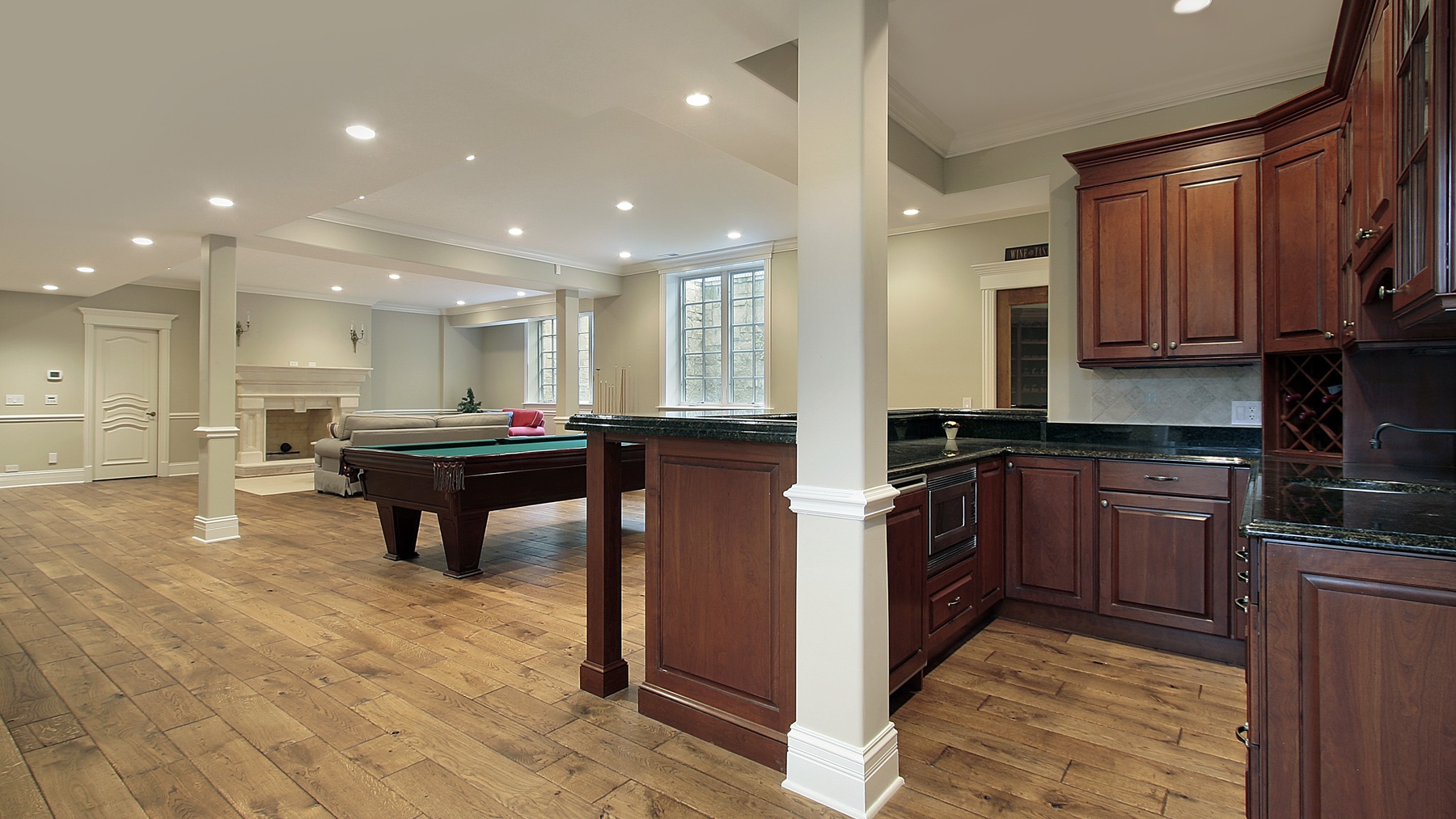
Imagine walking down into your basement one day and realizing it no longer feels like “storage space,” but potential. A quiet office, a cozy family lounge, maybe even a home gym. That moment of possibility is exactly where most homeowners begin their journey into basement finishing vs. remodeling. But here is where confusion starts. Many people think they are the same thing when, in reality, they serve very different purposes.
Understanding this difference can save you from overspending, redesign mistakes, and unrealistic expectations. Whether you are planning a simple upgrade or a full transformation, knowing when basement finishing applies and when remodeling is the better path makes all the difference.
If you’re exploring Home Renovation Services in Detroit MI, this distinction becomes even more important for planning your budget and design direction.
Key Takeaways
- Basement finishing turns an unfinished space into a livable area
- Remodeling updates or transforms an already finished basement
- Costs, timelines, and design complexity vary significantly
- The right choice depends on your current basement condition and goals
The Real Problem Homeowners Face
Most homeowners assume every basement project falls under one category. They hear contractors mention basement finishing cost or basement remodeling cost and treat them interchangeably. This leads to confusion during budgeting and often results in underestimating the scope of work.
The truth is simple: basement finishing is about creation, while remodeling is about transformation.
One builds from scratch. The other rebuilds what already exists.
And knowing this early helps you avoid one of the most common mistakes in home improvement, starting a project without understanding what you’re actually paying for.
What Is the Basement Finishing?
Definition:
Basement finishing is the process of converting an unfinished basement into a fully functional living space by adding walls, flooring, lighting, insulation, and essential systems.
At its core, basement finishing is about turning blank space into usable square footage. Think of concrete floors becoming warm hardwood, exposed pipes hidden behind drywall, and dim corners replaced with proper lighting.
Typical elements include:
- Framing and drywall installation
- Electrical and lighting systems
- Flooring installation
- Insulation and moisture control
- Basic layout creation
Many homeowners start here because it unlocks hidden value in their home. In fact, a well-planned renovation can significantly improve basement home value increase, especially in growing housing markets.
What Is Basement Remodeling?
Basement remodeling is different because it focuses on upgrading or reconfiguring a space that is already finished. Instead of building from scratch, you are improving what already exists.
This may involve:
- Changing layouts or room functions
- Updating outdated materials
- Adding luxury features like wet bars or theaters
- Expanding or dividing rooms
If basement finishing is about creation, remodeling is about reinvention. You’re not just making the space livable, you’re making it better aligned with your lifestyle today.
Key Differences Explained
The difference between basement finishing and remodeling becomes clearer when you compare intent, cost, and complexity.
Practice | When It Helps | Simple Cue | Mistake |
Basement finishing | When basement is unfinished | “Blank concrete space” | Underestimating electrical/plumbing needs |
Remodeling | When basement is already usable | “Old or outdated layout” | Ignoring structural limitations |
Both approaches can dramatically improve your home, but they serve different stages of property development.
A Simple Framework to Decide
Here’s a practical way to decide between the two:
- Assess the space condition – Is it raw or already finished?
- Define your goal – Are you creating or upgrading?
- Check infrastructure – Plumbing, wiring, and insulation status
- Estimate budget range – Compare basement remodeling cost vs finishing
- Plan long-term use – Entertainment, rental, office, or storage
This framework helps homeowners avoid emotional decisions and focus on practical outcomes when dealing with basement renovation vs remodel choices.
A Realistic Homeowner Scenario
Consider a homeowner in Detroit who buys a house with an unfinished basement. They want a guest suite and home office. This is a clear case for basement finishing because the space starts from zero.
Now imagine another homeowner with a 15-year-old finished basement featuring outdated carpet and poor lighting. They do not need a full rebuild. They need a remodel that upgrades finishes, improves layout, and modernizes design.
Both projects improve comfort, but the approach is completely different.
Cost and Value Perspective
Cost often becomes the deciding factor.
- Basement finishing cost is typically higher upfront because it includes foundational work.
- Basement remodeling cost varies depending on how much demolition or redesign is required.
According to Remodeling Magazine’s Cost vs. Value report, mid-range home improvement projects can recoup around 60–70% of their cost in added home value:
https://www.remodeling.hw.net/cost-vs-value/2024
This is why homeowners carefully evaluate whether basement finishing or remodeling provides better long-term return.
Common Mistakes to Avoid
Even experienced homeowners make these errors:
- Underestimating moisture and insulation needs
- Choosing design before function
- Ignoring structural limitations
- Mixing remodeling goals with finishing requirements
- Hiring without checking experience in basement renovation services
Avoiding these mistakes ensures smoother execution and better results.
Expert Insight Framework: “Space Potential Model”
A simple way professionals evaluate basements is through this model:
- Raw Potential → Empty basement = finishing required
- Functional Potential → Usable but outdated = remodeling required
- Lifestyle Potential → How the space will support daily living
This framework helps clarify whether basement finishing or remodeling is appropriate before work begins.
Quote to Remember
“Good buildings come from good people, and all problems are solved by good design.” Stephen Gardiner
Design clarity is exactly what separates successful basement projects from costly ones.
Final Thoughts
Choosing between basement finishing and remodeling isn’t just a technical decision, it’s a lifestyle one. One creates opportunity where none existed, while the other refines what already works.
For homeowners exploring basement finishing, the focus should always be on building strong foundations first, comfort, safety, and long-term usability. Remodeling, on the other hand, allows creativity to reshape familiar spaces into something new again.
Companies like In The D Construction understand how these decisions shape not just homes, but how families actually live inside them.
Summary
Basement projects fall into two clear categories: finishing and remodeling. Basement finishing builds livable space from scratch, while remodeling upgrades an already completed area. Both improve home value, but they differ in cost, complexity, and purpose. Understanding this distinction helps homeowners make smarter renovation decisions that align with their goals and budget.
FAQs
1. What is the main difference between basement finishing and remodeling?
Basement finishing creates a livable space from an unfinished basement, while remodeling improves an already finished one.
2. Is basement finishing more expensive than remodeling?
In most cases, yes because basement finishing includes structural work, utilities, and full space creation.
3. How long does a basement finishing project take?
It depends on size and complexity, but most projects take several weeks to a few months.
4. Why should I hire professionals like In The D Construction?
Because experienced contractors ensure proper planning, safety compliance, and high-quality execution tailored to your home.
5. When should I choose remodeling instead of finishing?
Choose remodeling when your basement is already functional but outdated or not aligned with your current needs.